Changing Land Governance and the Recognition of Traditional Authorities
MINDCAF Clarifies the Implementation and Collective Ownership of Ministerial Circular Letters
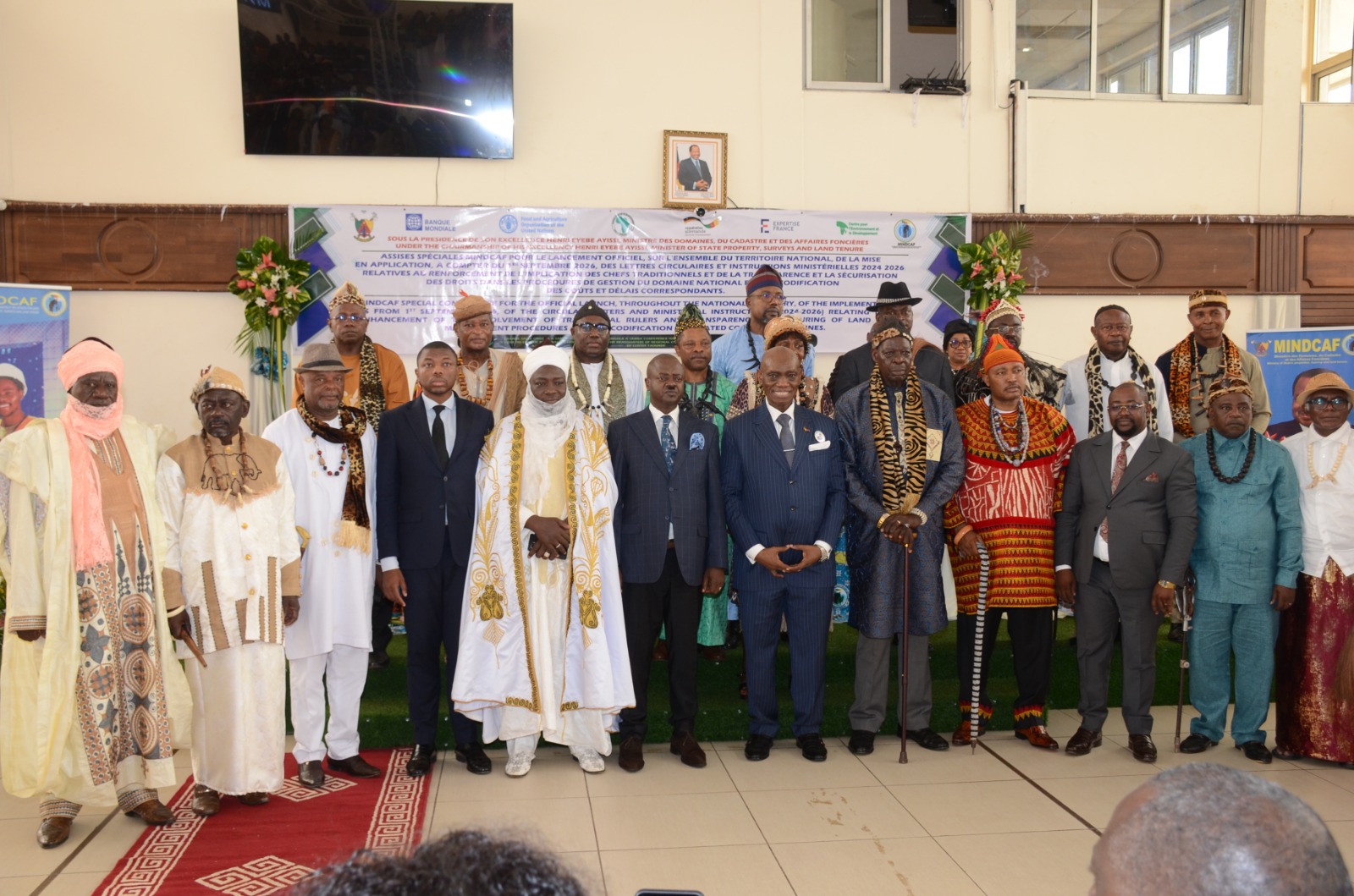
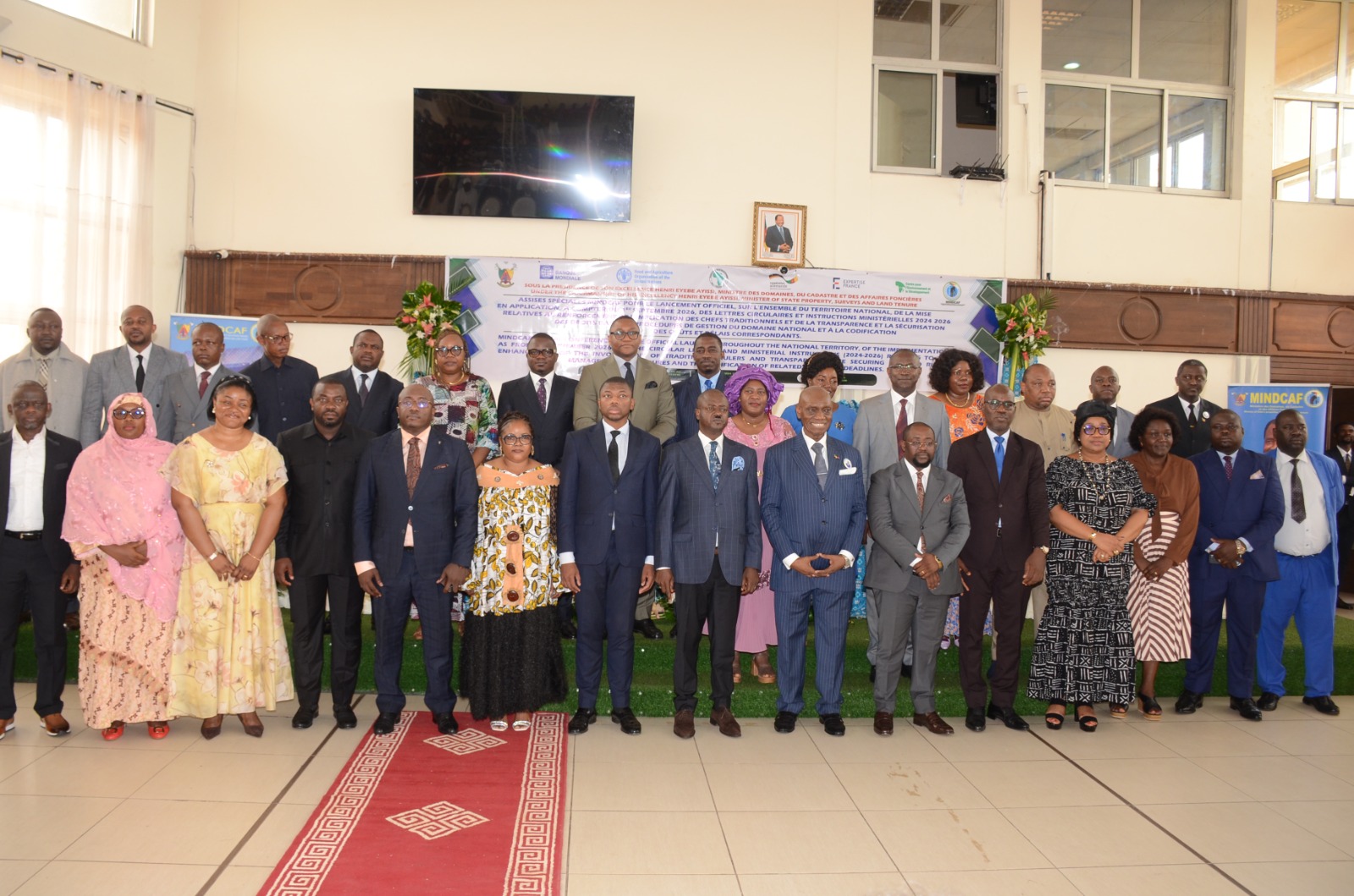
On 23 July 2026, at the Mont Febe Hotel in Yaounde, the Ministry of State Property, Surveys and Land Tenure (MINDCAF) organised a National Forum dedicated to the collective ownership of Ministerial Circular Letters issued between 2024 and 2026. Bringing together public administrations, traditional authorities, technical and financial partners, and experts from the land sector, the event forms part of an ongoing reform process aimed at adapting land administration to local realities while strengthening the legal security of customary land rights.
In his opening remarks, Minister Henri Eyebe Ayissi stressed that the new circular letters do not create a new law, but rather clarify the implementation of Ordinances No. 74-1 and No. 74-2 of 6 July 1974, which constitutes the legal foundation of land management in Cameroon. “National Land is not property that can be sold; it is a land reserve for communities,’’ he recalled, referring to informal practices that undermine the integrity of the national land asset.
Among the major reforms highlighted were Circular Letter No. 0002 of 9 February 2024, relating to the involvement of Traditional Authorities in the work of Land Consultative Boards, and Circular Letter No. 006 of 26 December 2025, which strengthens the role of first- and second-class Traditional rulers through the introduction of the Letter of No Objection and the Letter of Reasoned Objection for specific land transactions. These measures aim to restore the authority of the historical custodians of the land while placing stricter regulations on land transactions.
Administrative tools for the recognition of customary land rights, distinct from Certificates of ownership.
Participants were also edified on the introduction of the Certificate of Possession of Administratively Recognised Customary Land Rights (CPDFC-AR), as well as Attestations of recognition of customary land rights (ARDFC) and Attestations of Recognition of Customary Land Rights and the Attestation of Peaceful Use of Land (AJPTER). It was emphasised that these documents serve as administrative tools to secure land rights, but do not constitute land certificates or provisional land certificates, nor do they grant property ownership. They are issued to prevent conflicts and ensure transparency.
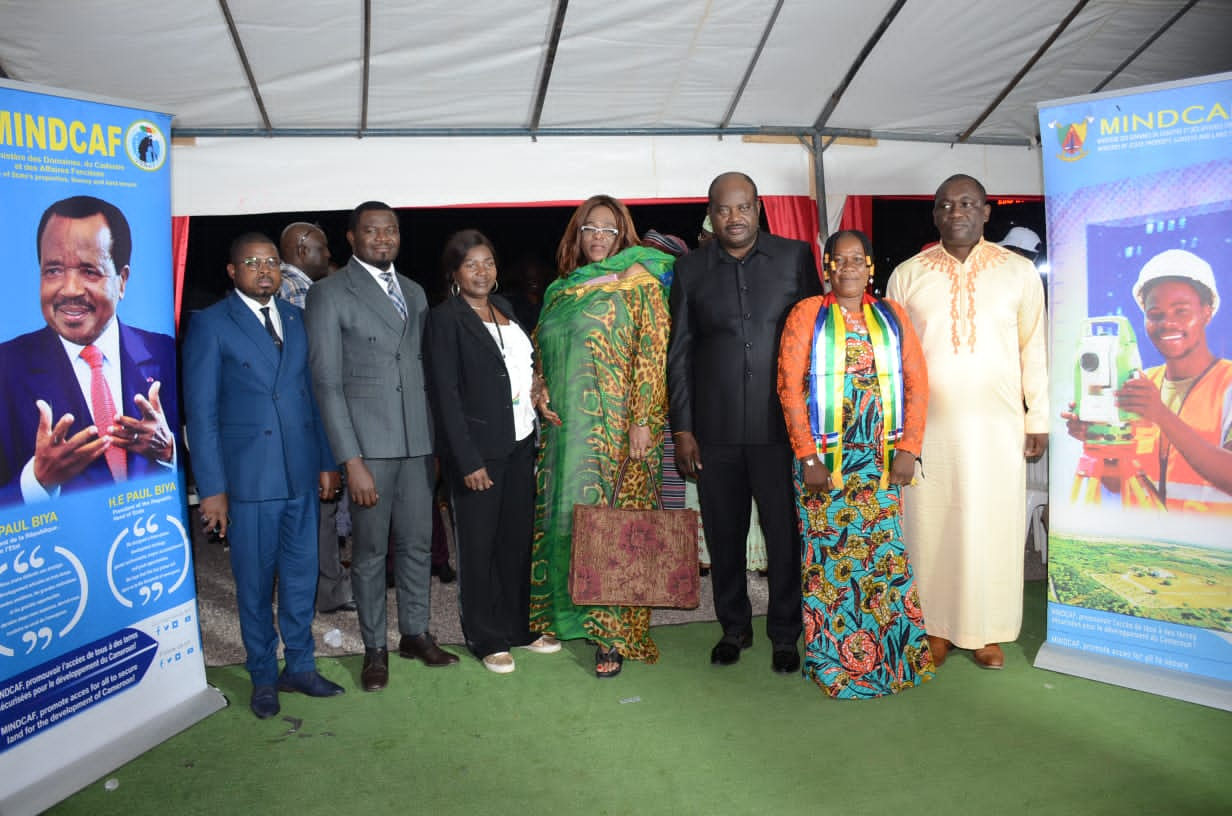
The ceremony equally featured the official handover to MINDCAF of the Soa Multipurpose Cadastre, developed within the framework of the Cameroon Urban Platform (PUC) Project, in the presence of Mrs Murielle Bisseck, Representative of Expertise France in Cameroon. Developed with the support of this organisation, this tool is expected to improve territorial planning and cadastral management. It serves as a technical lever for better-informed land governance.
National and International Recognition of the Reforms
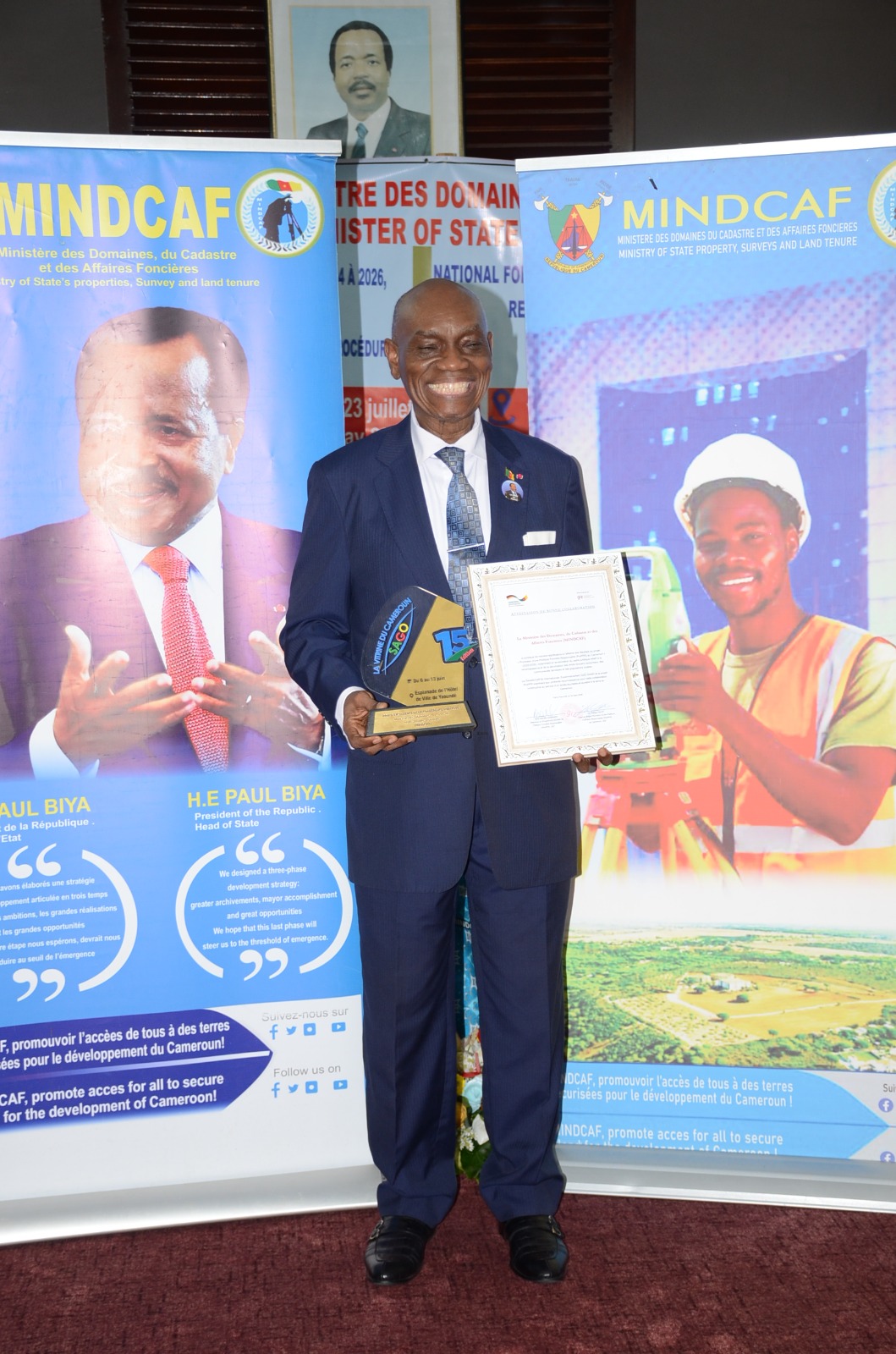
Minister Eyebe Ayissi received two distinctions: the Good Cooperation Award from GIZ, as part of the Project for the Promotion of a Responsible Land Policy (ProPFR), and the SAGO 2026 Award, presented by the organiser of the Government Action Fair. These accolades reflect the recognition of MINDCAF’s efforts by technical and financial partners, as well as civil society.
Implementation phase starting 1 September 2026
The proceedings concluded with technical workshops focusing on the role of traditional authorities, developments in land registration procedures and the rollout of the multipurpose cadastre. The new measures will come into force on 1 September 2026. By adopting a pedagogic approach, MINDCAF aims to ensure the effective ownership of these reforms by all stakeholders, thereby guaranteeing their success on the field.
Nick Didace