
Central Plain Project: MINDCAF AND THE AfDB TAKE A NEW STEP TOWARDS THE PROJECT’S MATURITY
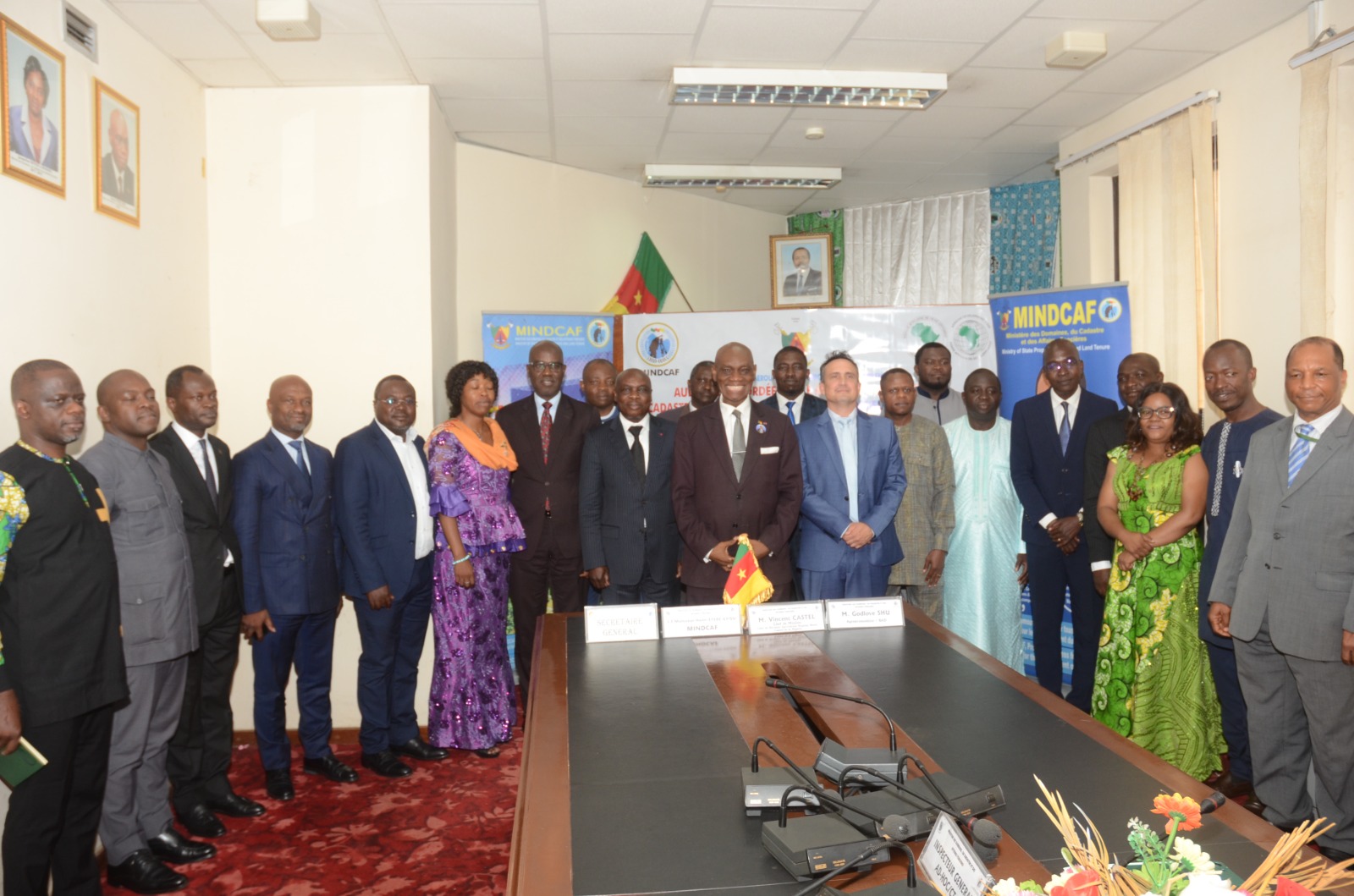
During an audience granted by the Minister of State Property, Surveys and Land Tenure, Henri Eyebe Ayissi, the delegation of the African Development Bank (AfDB) and the various stakeholders involved in the “Cameroon Central Plain Agro-Park” project reviewed the progress made and the outstanding actions to be completed before the next stage of the project appraisal process. As part of its overall vision, the project focuses on the development of large areas of land along the Batchenga–Ntui–Yoko–Tibati–Ngaoundere corridor.
The meeting, held at MINDCAF on 22 September 2026, constitutes part of an ongoing process that has been underway for several years between the Government of Cameroon and its technical and financial partners. As early as July 2024, a high-level mission was mobilised around the Central Plain agricultural land development project along the Batchenga–Ntui–Yoko–Tibati–Ngaoundere corridor. One of the objectives was to raise awareness among local communities about the project and its expected impacts.
Since then, discussions have continued with the African Development Bank (AfDB) and the various administrations concerned. In March 2025, a meeting at MINDCAF provided an opportunity to review the Agro Park project with the AfDB, MINADER and other stakeholders. At that meeting, MINDCAF was presented as a key stakeholder in securing and making land available to investors, in accordance with Cameroonian legislation.
This meeting confirms the project’s progress towards its maturity phase and spread across several stages of work, including project design, governance, arrangements for accessing land, the conditions for the establishment of producers, and environmental and social safeguards. The project has therefore not yet reached the stage of operational implementation of the programme as a whole; rather, it is at an advanced stage of formulation and appraisal.
In this regard, the AfDB stresses that the process has not been rushed over. The various consultations held with Cameroonian authorities have made it possible to further examine the project’s technical, institutional and financial parameters.
The stated objective is now to finalise the remaining components of project design so as to enable the appraisal process to continue and, ultimately, allow the project to be submitted to the relevant AfDB bodies.
The project aims, in particular, to promote the development of priority agricultural value chains and the establishment of large-scale producers, with significant private-sector involvement. This orientation places particular responsibility on MINDCAF, given its mandate for the management of State property, surveys and land tenure.
In April 2026, MINDCAF had already reported on the building of land reserves and works undertaken under the component dedicated to securing land tenure.
This land-related dimension explains the importance attached to clarifying procedures for the incorporation, securing and provision of land.
From a legal and administrative perspective, the work focuses particularly on ensuring consistency of the lease agreement and specifications that will govern the provision of the land.
The project’s Environmental and Social Impact Assessment provides, particularly, for measures relating to compensation for assets to be demolished and assistance to affected persons before the commencement of works, in accordance with the applicable procedures.
For the AfDB, this aspect must be examined in the light of both national requirements and the environmental and social standards applicable to its operations. The objective is to ensure that affected persons are properly identified, losses are assessed and compensation mechanisms are secured before the implementation of the activities concerned.
The AfDB further specifies that land allocation falls within the remit of the competent Cameroonian authorities. Its involvement notably focuses on the quality of the governance framework, transparent procedures and compliance with the requirements applicable to the project.
A workshop to review and harmonise these documents was held following the approval of its organisation by Minister Henri Eyebe Ayissi.
A Detailed Land Development Plan is also available at the level of the project owner. Its approval by the competent authorities is one of the next steps expected before its final consolidation within the project’s framework.
This link between planning, land tenure security and contractual arrangements is intended to establish a framework that is sufficiently clear to enable investors and producers, in due course, to establish themselves under legally secure conditions.
To support this momentum, a Project Management Unit has been set up within MINDCAF. It is one of the technical mechanisms responsible for monitoring the various components falling within the Ministry’s remit.
The team notably includes a Unit Coordinator as well as officers responsible for Surveys, State property and land tenure matters, and monitoring and evaluation.
This organisational structure reflects MINDCAF’s determination to establish a permanent mechanism for coordinating and monitoring the actions required related to the project.
Derlin Afana